
Why Agent Testing Matters More Than You Think
AI agents can reason, call tools, and act across systems—but that autonomy creates new risks. Discover why agent testing is essential for validating behavior, failures, security, MCP workflows, and real-world reliability before production.
Why Agent Testing Matters More Than You Think
AI applications are rapidly evolving from simple prompt-and-response systems into autonomous agents capable of reasoning, selecting tools, interacting with APIs, maintaining context, and executing multi-step workflows.
That shift is powerful—but it also introduces a new class of engineering challenges.
A traditional application generally follows paths developers explicitly define. An AI agent is different. Give the same agent a similar task twice and it may choose different tools, construct different arguments, follow a different sequence of actions, or arrive at the same result through an entirely different reasoning path.
This means testing an AI agent isn't simply about asking:
“Did the API return 200 OK?”
The more important question is:
“Did the agent make the right decisions, use the right tools, handle failures correctly, and achieve the intended outcome safely?”
That is why agent testing is becoming a critical part of modern AI engineering.
From Deterministic Software to Agentic Systems
Traditional software is largely deterministic.
A request enters the system, predefined application logic processes it, and a predictable response is produced.
Agentic systems introduce another decision-making layer.
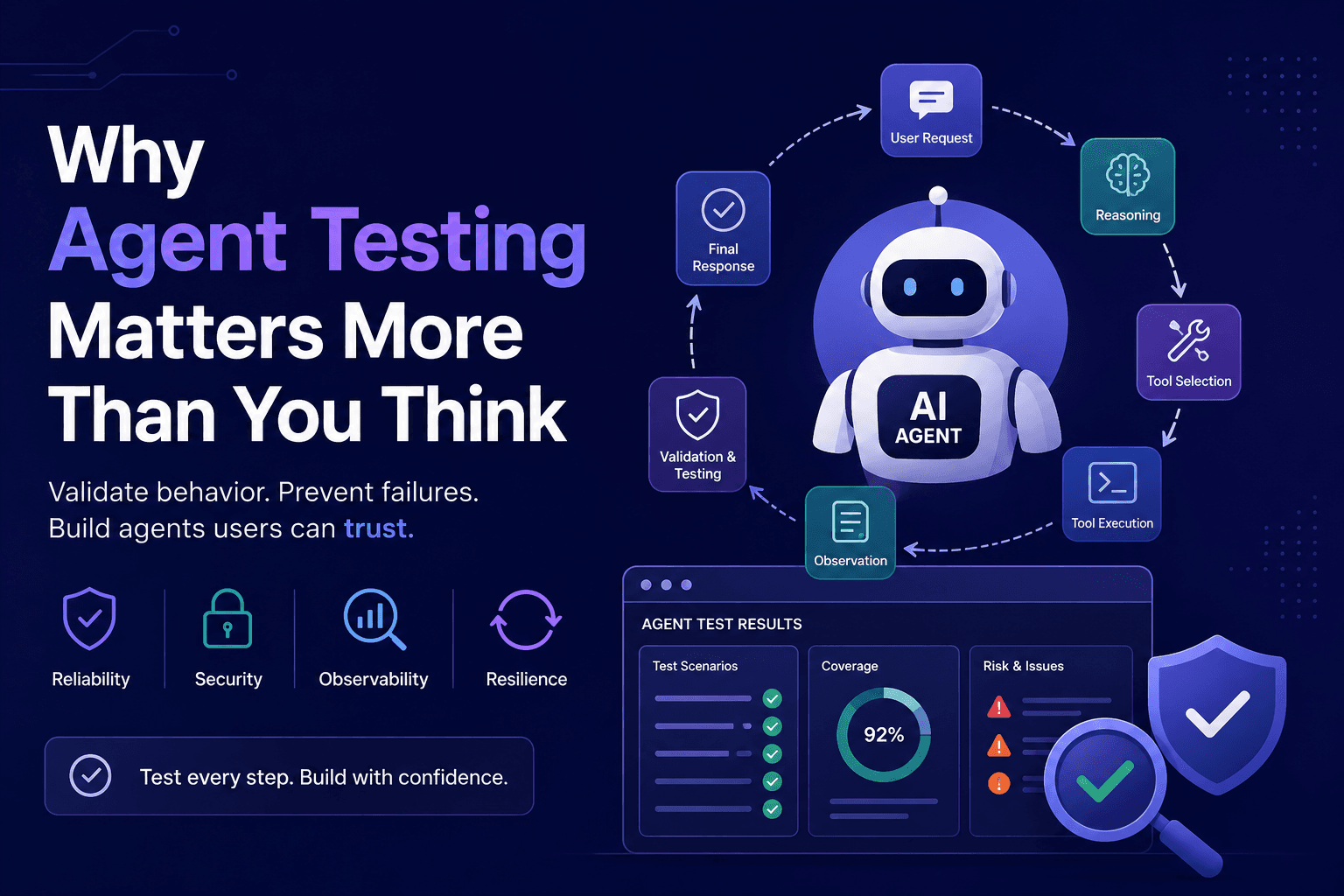
A typical agent workflow may look like:
User Request → Agent → Reasoning → Tool Selection → Tool Execution → Observation → Further Action → Final Response
An agent might need to:
- understand the user's intent;
- determine which tool or service is appropriate;
- discover available capabilities;
- generate valid tool arguments;
- authenticate with external systems;
- execute one or more tool calls;
- interpret the results;
- recover from errors;
- decide whether another action is required; and
- generate a useful final response.
Every additional decision introduces another potential failure point.
And importantly, individual components can work perfectly while the overall agent workflow still fails.
A Successful Tool Call Doesn't Mean a Successful Agent
Imagine an agent that has access to tools for searching customer records, retrieving orders, processing refunds, and sending notifications.
A customer asks:
“Find my latest order and refund it if it hasn't shipped.”
Every underlying API could be healthy.
The agent could still:
- select the wrong customer;
- retrieve the wrong order;
- misunderstand the shipping status;
- call the refund tool prematurely;
- supply incorrect arguments;
- retry a non-idempotent operation;
- ignore an authorization failure;
- report that the refund succeeded when it actually failed.
From an API-monitoring perspective, the infrastructure may appear perfectly healthy.
From the user's perspective, the system has failed.
Agent testing therefore needs to validate behaviour, not merely connectivity.
What Should You Actually Test?
A production-ready agent testing strategy should operate across multiple layers.
1. Tool Discovery and Selection
Can the agent correctly understand the capabilities available to it?
Test whether the agent can discover relevant tools and choose the appropriate one for a given task.
An agent with twenty available tools shouldn't simply find a tool that works—it should select the correct tool for the user's intent.
2. Tool Arguments
Selecting the correct tool is only half the problem.
Agents must also construct valid inputs.
Testing should verify required parameters, data types, boundary conditions, malformed values, missing fields, schema compliance, and unexpected model-generated arguments.
This becomes particularly important when tools can perform consequential actions.
3. Multi-Step Workflows
Real-world agent tasks rarely involve a single tool call.
An agent may need to:
Search → Retrieve → Analyse → Decide → Execute → Verify → Respond
Testing each tool independently cannot prove that this entire workflow works correctly.
End-to-end scenarios should validate the sequence of actions, dependencies between steps, intermediate results, and final outcome.
4. Failure and Recovery
Production systems fail.
APIs time out. Authentication expires. Services become unavailable. Tools return malformed responses. Rate limits are reached.
A robust agent should know how to respond.
Agent tests should deliberately introduce failures and verify whether the agent retries appropriately, chooses an alternative path, requests clarification, stops safely, or communicates the failure accurately.
5. Authentication and Authorization
Agents increasingly interact with OAuth-protected APIs, MCP servers, enterprise services, databases, and internal platforms.
Testing should confirm not only whether authentication succeeds, but also what happens when tokens expire, scopes are insufficient, credentials are invalid, permissions change, or access is denied.
A capable agent must understand the boundary between what it can technically attempt and what it is actually authorized to do.
6. State and Context
Agents often operate across multiple interactions.
That introduces questions such as:
- Does the agent preserve the correct context?
- Can one session affect another?
- Does stale information influence later decisions?
- Does reconnecting change behaviour?
- Can an agent safely resume an interrupted workflow?
State-related bugs can be particularly difficult to reproduce without structured testing.
7. Protocol Behaviour
Modern agents increasingly communicate through standardized protocols such as the Model Context Protocol (MCP).
In these environments, testing should go beyond individual business functions and verify protocol behaviour itself—including initialization, capability negotiation, tools, resources, prompts, request/response structures, errors, transport behaviour, and session handling.
Protocol compliance becomes especially important when one client needs to work reliably with many independently developed servers.
The Problem With “It Worked in the Demo”
One of the biggest traps in agent development is successful demonstration bias.
A developer creates a prompt, connects a few tools, runs several examples, and everything appears to work.
Then production happens.
Users phrase requests differently.
Tools return unexpected data.
Network latency increases.
Authentication expires.
External services change.
Models choose unexpected execution paths.
A workflow that succeeded ten times during development may still contain failure modes that haven't been exercised.
Production readiness therefore requires moving from:
“I tried it and it worked.”
to:
“We systematically tested the behaviours and failure conditions we expect this agent to encounter.”
Agent Testing Should Include Negative Testing
Testing only the happy path provides limited confidence.
Some of the most valuable agent tests deliberately create difficult conditions:
What happens if the requested tool doesn't exist?
What if required arguments are missing?
What if an MCP server disconnects halfway through execution?
What if authentication expires between two tool calls?
What if the tool returns an unexpected schema?
What if the agent receives contradictory results?
What if the same operation is accidentally executed twice?
These scenarios reveal whether the agent can fail predictably, transparently, and safely.
That characteristic is often more important than whether the agent succeeds under ideal conditions.
Observability Changes Everything
When an agent fails, knowing that it failed isn't enough.
Engineers need to understand how it reached that outcome.
Useful agent testing therefore requires visibility into the execution flow:
Request → Model Decision → Tool Selection → Arguments → Tool Response → Next Decision → Final Result
Capturing these interactions makes it possible to investigate failures, compare executions, reproduce scenarios, identify regressions, measure latency, and understand why apparently similar requests produced different outcomes.
Without this visibility, debugging an agent can quickly become guesswork.
Regression Testing Becomes Essential
Agent behaviour can change even when application code doesn't.
Changing a model, system prompt, tool description, schema, MCP server, temperature, retrieval strategy, or external dependency may alter how an agent behaves.
A workflow that worked yesterday can begin selecting a different tool tomorrow.
Maintaining reusable test scenarios allows teams to rerun important workflows whenever the surrounding system changes.
That makes regression testing a fundamental capability for serious agent development.
Testing MCP-Based Agents
MCP makes it possible for AI applications to connect to a growing ecosystem of tools, resources, prompts, and external capabilities through a standardized interface.
But interoperability doesn't eliminate the need for testing.
It increases it.
An MCP-powered agent may simultaneously communicate with several servers developed by different vendors or teams.
Each server may expose different capabilities, authentication mechanisms, schemas, transports, errors, and operational characteristics.
A comprehensive MCP testing workflow should therefore validate several dimensions:
Connectivity → Protocol Compliance → Capability Discovery → Authentication → Individual Tool Execution → Multi-Server Workflows → Agent Behaviour → Failure Recovery
This provides much greater confidence than simply verifying that an MCP server can connect.
Where MCP Cognito Workbench Fits
This is the problem space that MCP Cognito Workbench is designed to address.
Instead of treating an MCP connection or individual tool call as the end of testing, the goal is to provide a structured environment where developers can inspect, validate, test, and understand the complete MCP and agent interaction lifecycle.
That includes areas such as:
- connecting and managing MCP servers;
- inspecting available tools, resources, and prompts;
- validating MCP protocol behaviour;
- executing individual capabilities;
- creating reusable test cases and test suites;
- testing authentication scenarios;
- exploring multi-server agent workflows;
- inspecting complete requests and responses;
- analysing execution behaviour; and
- turning successful interactions into repeatable testing workflows.
The objective is simple:
Make agent behaviour observable, reproducible, and testable before it becomes a production problem.
The Future of AI Testing
As AI systems become more autonomous, testing will increasingly move beyond validating code.
Teams will need to validate decisions, interactions, workflows, permissions, protocols, recovery strategies, and outcomes.
The question will no longer be only:
“Does this function work?”
It will increasingly become:
“Can we trust this agent to behave correctly when the real world doesn't follow the happy path?”
That is a much higher standard.
And it is exactly why agent testing matters more than you think.
More from the blog
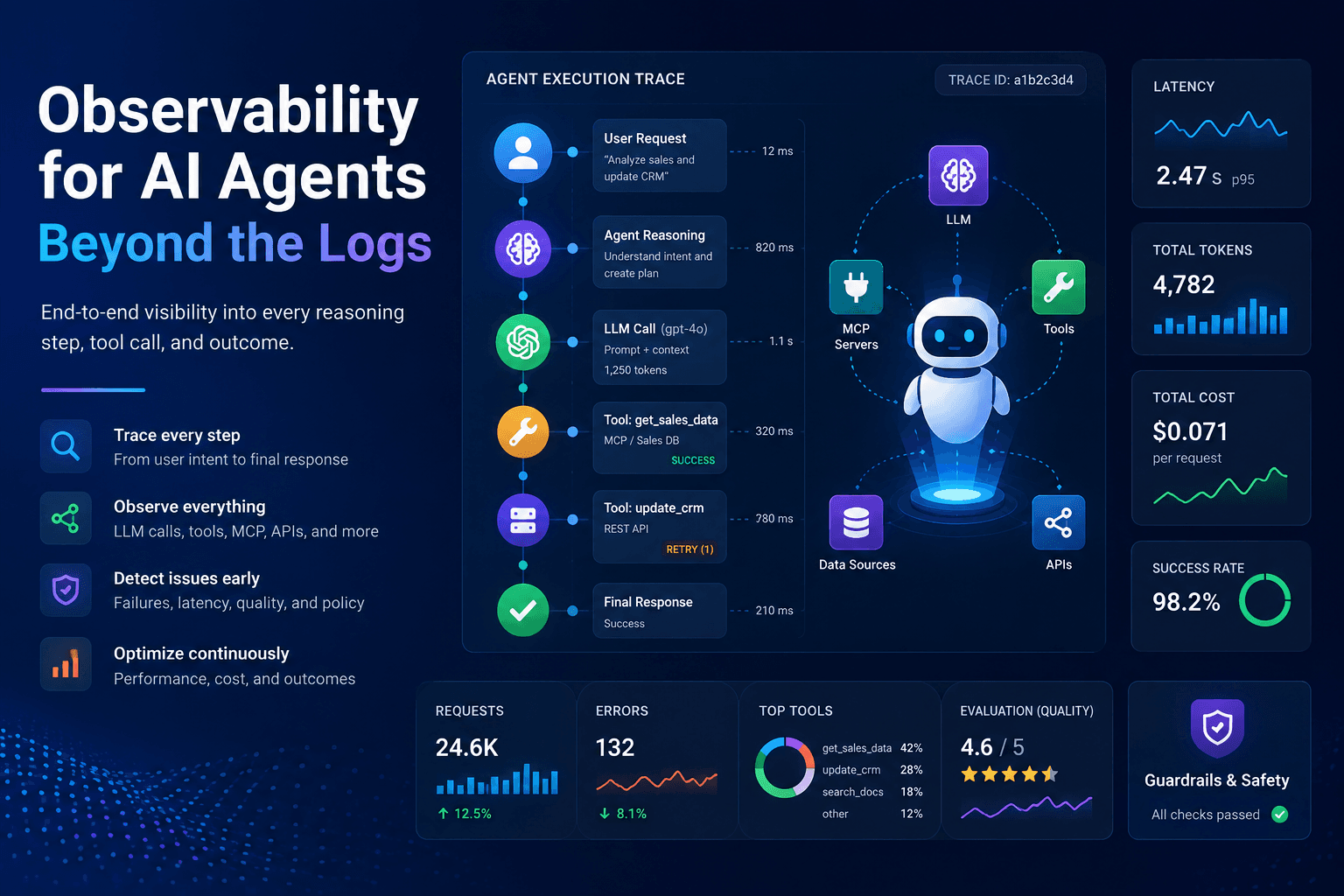
Observability for AI Agents - Beyond the Logs
Go beyond traditional logs with modern AI agent observability. Trace LLM interactions, tool and MCP calls, latency, token usage, costs, failures, and outcomes to understand agent behavior, accelerate debugging, and build reliable production-ready AI systems.
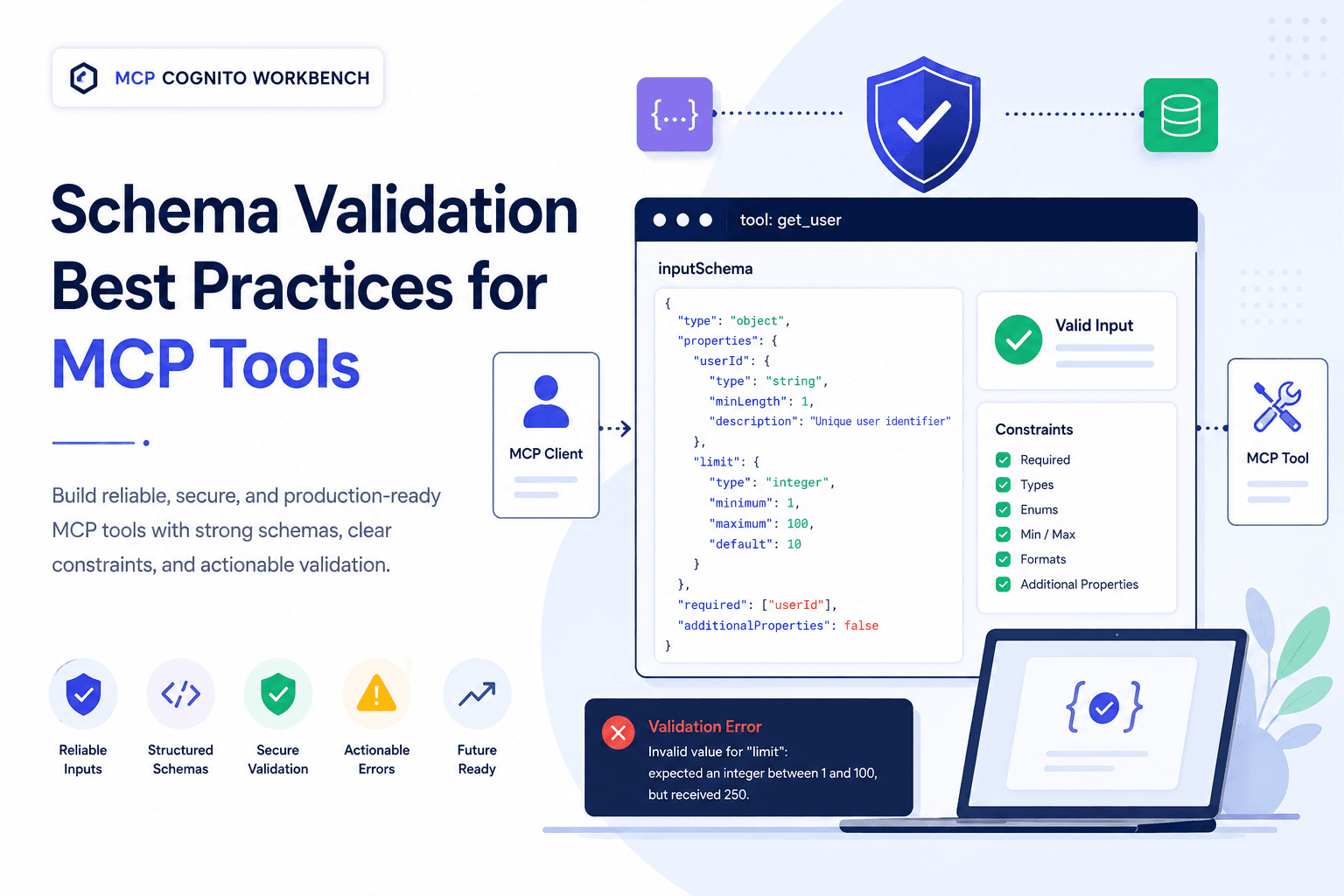
Schema Validation Best Practices for MCP Tools
Build reliable, secure, and production-ready MCP tools with robust schema validation. Explore best practices for input constraints, structured outputs, actionable errors, security, compatibility, and testing to create predictable, interoperable MCP integrations.
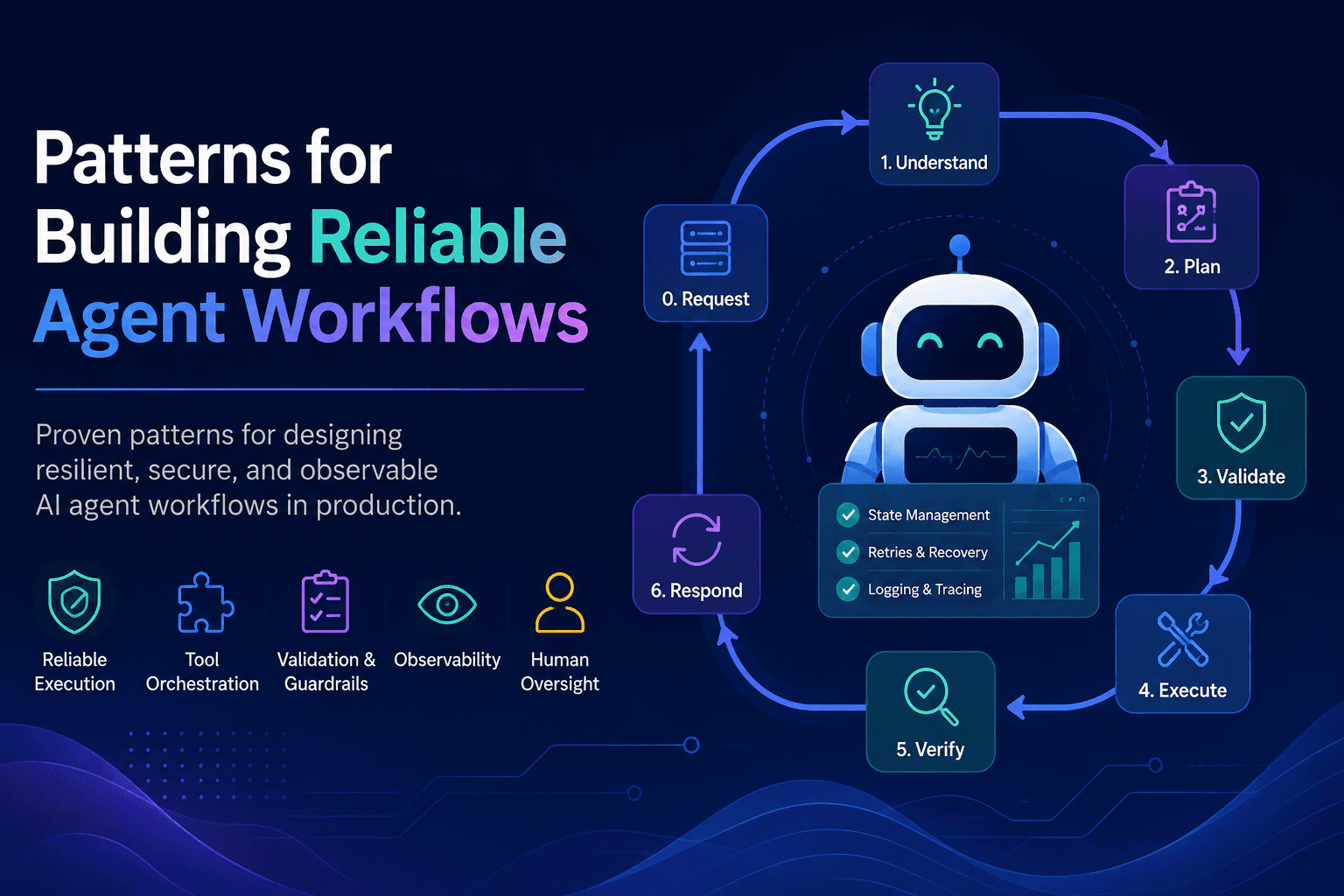
Patterns for Building Reliable Agent Workflows
Discover proven patterns for building reliable AI agent workflows with structured planning, safe tool use, validation, retries, observability, state management, and human oversight—designed for resilient, production-ready agent systems.