
Patterns for Building Reliable Agent Workflows
Discover proven patterns for building reliable AI agent workflows with structured planning, safe tool use, validation, retries, observability, state management, and human oversight—designed for resilient, production-ready agent systems.
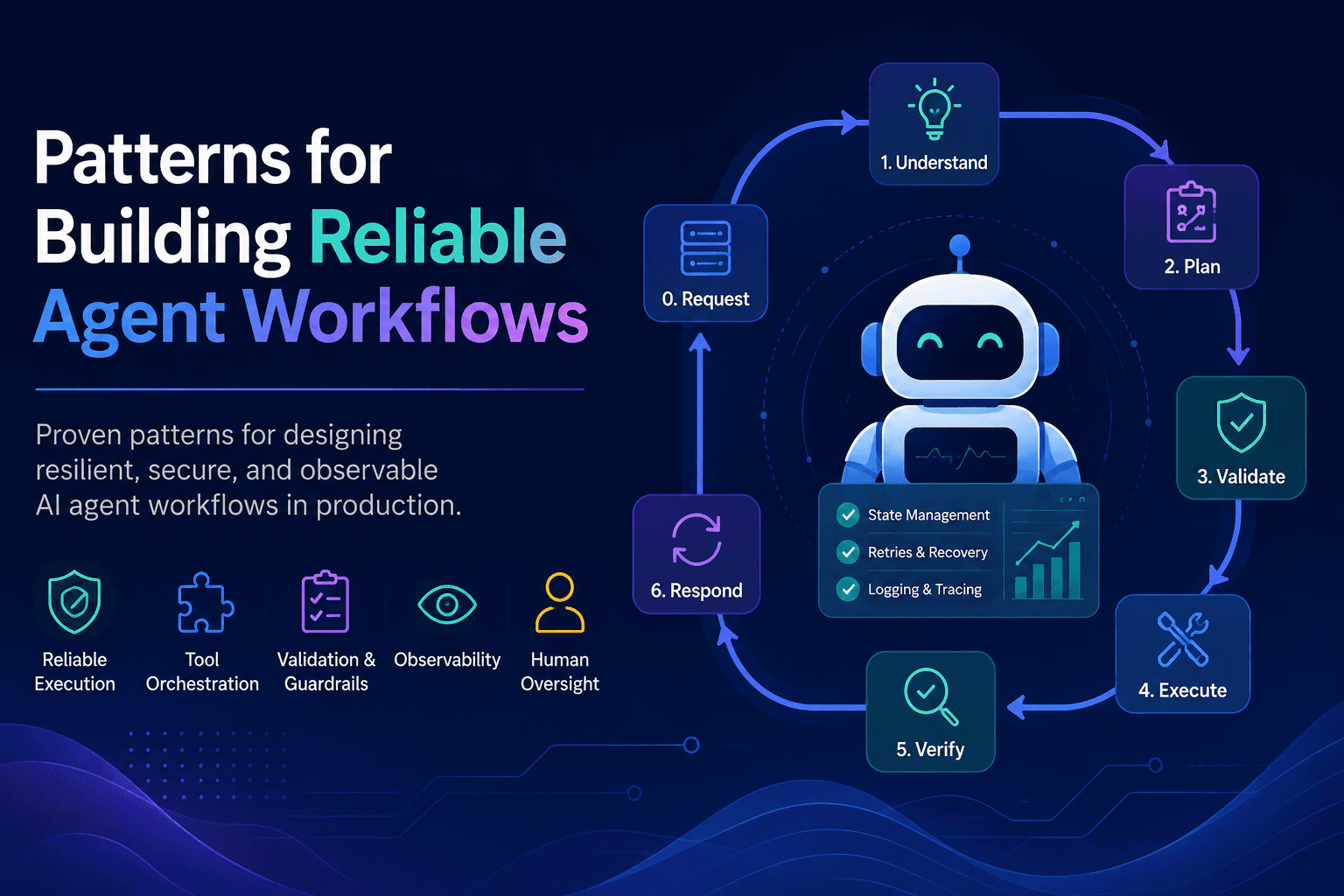
Patterns for Building Reliable Agent Workflows
AI agents are rapidly evolving from simple conversational assistants into systems capable of reasoning, calling tools, interacting with APIs, coordinating multiple services, and executing complex workflows.
But increased autonomy introduces a fundamental engineering challenge: reliability.
A production agent cannot simply generate a plausible response and hope that the workflow succeeds. It needs clear execution boundaries, validated inputs and outputs, controlled tool access, predictable recovery mechanisms, and sufficient observability to understand exactly what happened when something goes wrong.
The most reliable agent systems therefore combine the flexibility of large language models with the deterministic controls of traditional software engineering.
1. Separate Planning from Execution
Avoid allowing an agent to reason about a task and immediately execute every action it proposes.
A stronger pattern separates the workflow into distinct stages:
Request → Understand → Plan → Validate → Execute → Verify → Respond
The planning stage determines what needs to happen, while the execution layer controls what is actually allowed to happen.
This separation makes workflows easier to inspect, test, secure, and recover.
For high-impact operations—such as modifying data, triggering deployments, sending communications, or executing financial transactions—the proposed action can also pass through policy checks or human approval before execution.
2. Use Structured Outputs
Free-form natural language is useful for conversations but fragile as an interface between workflow components.
Wherever possible, agents should produce structured, schema-validated outputs.
For example:
{ "action": "create_ticket", "priority": "high", "parameters": { "category": "production_error" }, "requiresApproval": false}
Using structured outputs provides several advantages:
- predictable downstream processing
- schema validation
- easier automated testing
- safer tool invocation
- improved logging and auditing
- simpler error handling
Treat the model's output as untrusted input that must be validated, rather than executable instructions.
3. Design Tools with Clear Contracts
Reliable agents depend heavily on reliable tools.
Each tool should have a narrow responsibility and clearly defined:
Input → Validation → Operation → Structured Result
Avoid exposing unnecessarily broad functions such as executeCommand when purpose-built operations such as getCustomer, createTicket, or checkDeploymentStatus can accomplish the task safely.
Tool descriptions should also clearly communicate what a tool does, when it should be used, its required parameters, and any important limitations.
This becomes particularly important when agents dynamically discover capabilities through systems such as the Model Context Protocol (MCP).
4. Validate Before and After Tool Execution
Validation should happen on both sides of every important operation.
Before execution, validate:
- required parameters
- data types and schemas
- authorization
- permissions and scopes
- business rules
- environmental constraints
After execution, validate the returned result before allowing the agent to continue.
A successful HTTP response, for example, does not necessarily mean that the requested business operation succeeded.
The workflow should verify the expected outcome.
5. Build for Failure
Agent workflows interact with models, databases, APIs, MCP servers, search systems, external services, and distributed infrastructure. Any of these dependencies can fail.
Failure handling should therefore be part of the workflow architecture rather than an afterthought.
Useful resilience mechanisms include:
Retries with exponential backoff for temporary failures.
Timeouts to prevent stalled operations from blocking workflows indefinitely.
Fallbacks when the preferred model, tool, or service is unavailable.
Circuit breakers to prevent repeated requests to unhealthy dependencies.
Checkpointing so long-running workflows can resume without starting again.
Compensating actions when previously completed operations must be reversed.
Not every failure should be retried. Authentication errors, invalid parameters, permission failures, and policy violations normally require correction rather than repetition
More from the blog
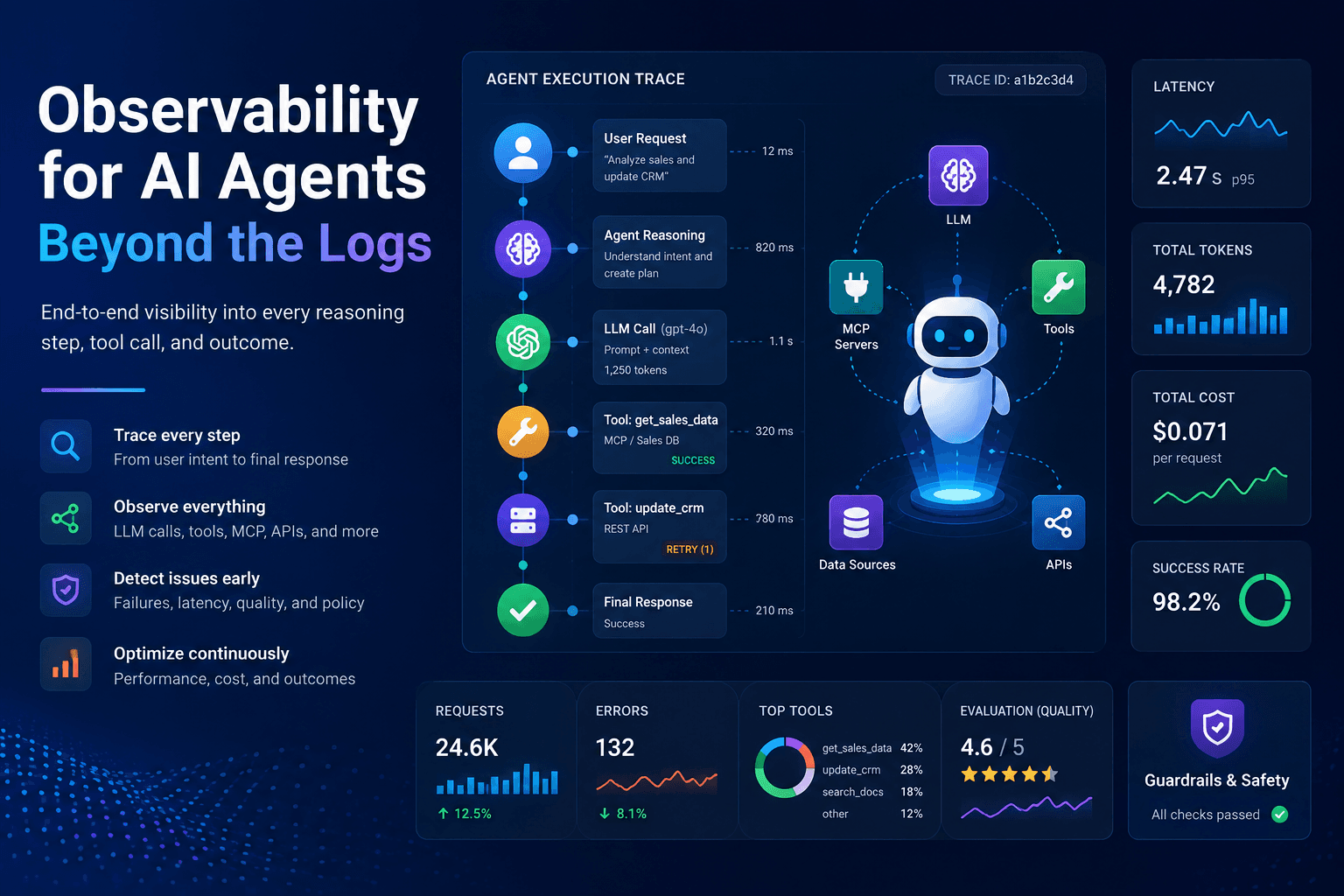
Observability for AI Agents - Beyond the Logs
Go beyond traditional logs with modern AI agent observability. Trace LLM interactions, tool and MCP calls, latency, token usage, costs, failures, and outcomes to understand agent behavior, accelerate debugging, and build reliable production-ready AI systems.
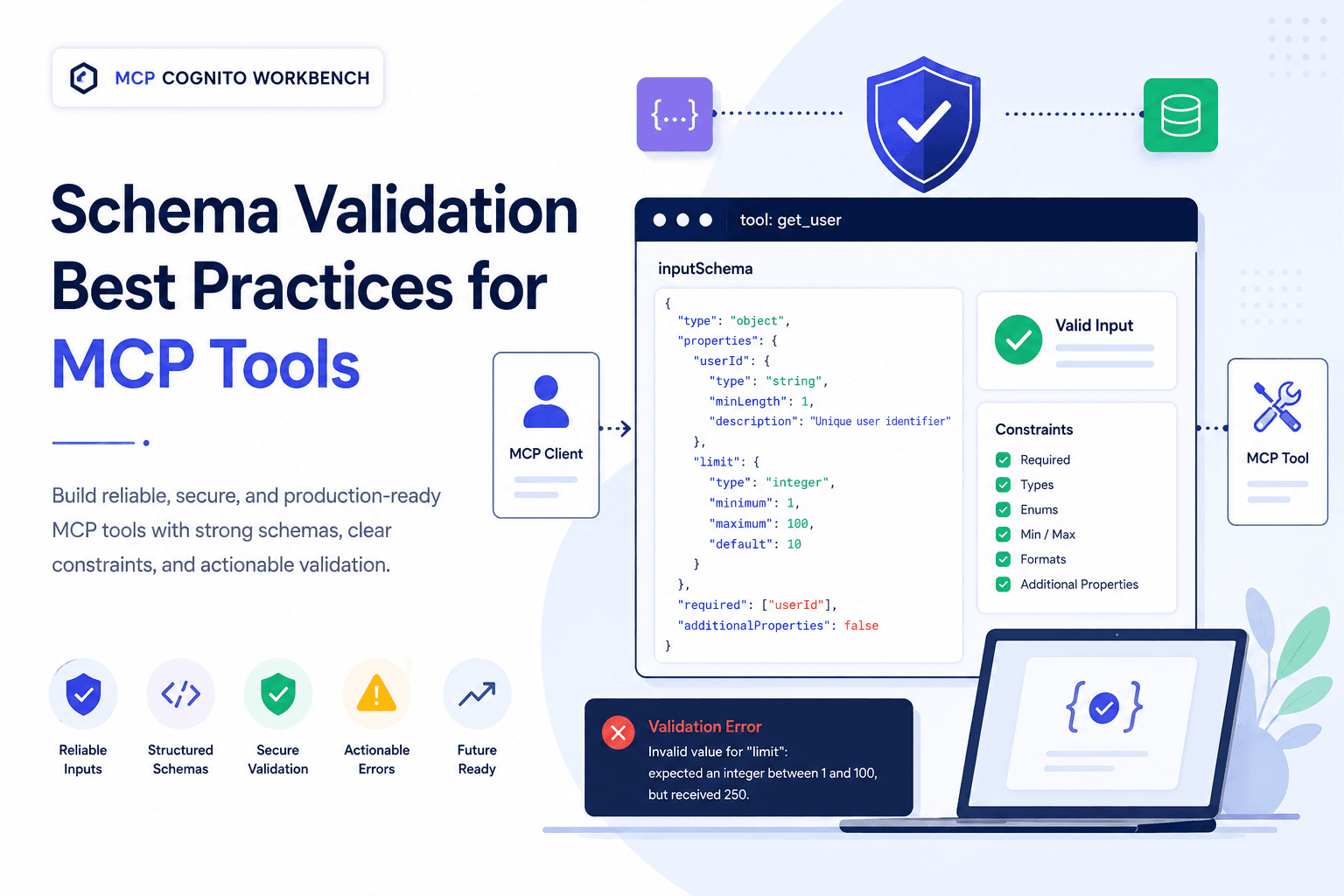
Schema Validation Best Practices for MCP Tools
Build reliable, secure, and production-ready MCP tools with robust schema validation. Explore best practices for input constraints, structured outputs, actionable errors, security, compatibility, and testing to create predictable, interoperable MCP integrations.
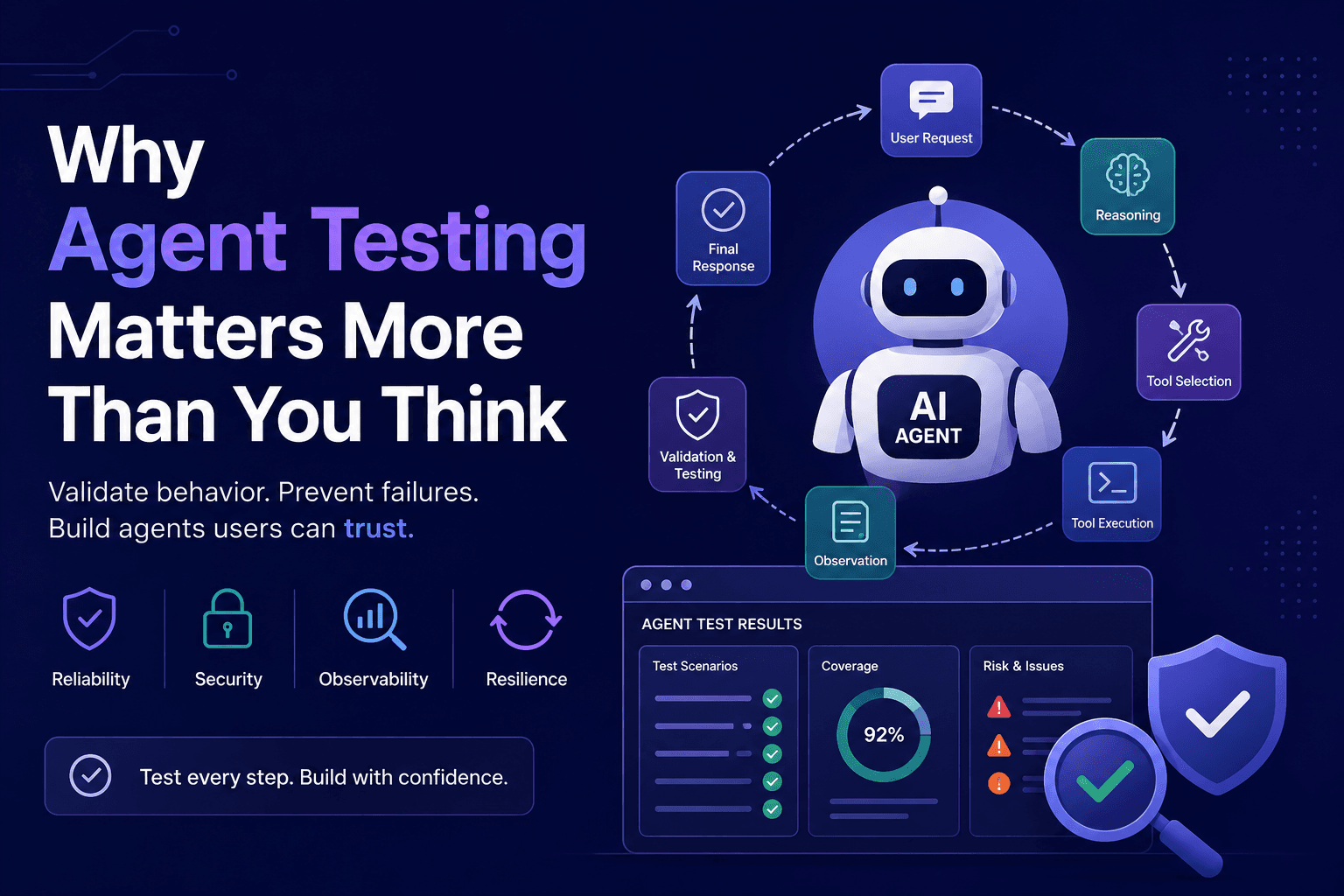
Why Agent Testing Matters More Than You Think
AI agents can reason, call tools, and act across systems—but that autonomy creates new risks. Discover why agent testing is essential for validating behavior, failures, security, MCP workflows, and real-world reliability before production.